At last month’s StokerCon, I was invited to participate on a panel about the subject of ecohorror—that is, horror fiction with environmental themes—titled “Eco-Horror: Is Nature Trying to Kill Us?”
As it was proposed to me, the panel would “discuss some of the early examples of ecohorror in literature, like Algernon Blackwood’s The Willows, and trace those influences on today’s ecohorror classics. We will also seek to define the subgenre more clearly through our discussion: Is ecohorror merely a horror story set in the woods? Is it when nature turns against humanity? Or is it when the story carries a message about humanity’s impact on the ecosystem?”
The panel was moderated by author Marc E. Fitch (Dead Ends, Boy in the Box, Paradise Burns). My fellow participants included authors Christopher Hawkins (Suburban Monsters, Downpour, I Contain Multitudes), Raymonde Chira (“Hells Shells” from The Off-Season: An Anthology of Coastal New Weird), and Brian J. Cummings (Dark Concepts).
We had a lively conversation that got very enthusiastic feedback. Given this blog’s emphasis on narrativity and environmentalism, I have reproduced Marc’s questions below, along with my responses only.

When I was first approached about moderating this panel, my friend wrote to me saying my novel Boy in the Box is “hard ecohorror.” Boy in the Box is about three friends who have to return to the site of a hunting accident to move a body and are stalked by a demonic presence. Probably half the novel is set in the woods, but I had never thought of it as “ecohorror.” That term always struck me as something different, and that is my question to all of you: Is ecohorror simply horror that takes place in the woods or involves animals trying to kill us like Cujo or Jaws or something? Or does the label of ecohorror point to something more, a message in the work?
More often than not, I would say ecohorror is going to deal with our relationship to animals and insects or to ecosystems writ large.
While “ecohorror” is certainly a broad-umbrella term, it can usually be applied to any story that explores or exploits a fear of nature or a fear for nature.
Jurassic Park is a fear of nature story: “Oh, my God—what have we unleashed?” In bringing back dinosaurs, have we arrogantly ensured our own extinction…?
Conversely, the plot of The Lost World is animated by a fear for nature, because you’ve got Jeff Goldblum trying to prevent the capitalistic exploitation of the dinosaurs. In the sequel, it’s the capitalists who are the real monsters, not the dinosaurs.
Jaws is, in many respects, a rather ecophobic movie, with the great white representing a threat to Amity Island’s capitalistic prosperity; the mayor very explicitly states, “Hey, we’re a summer town, and we need summer dollars.” The alternative is “being on welfare all winter,” as Quint bluntly warns, with the implied shame of living off the state. The filmmakers of Jaws—and, by extension, the audience—are rooting for capitalism, not nature, to triumph.
A year after Jaws, Dino De Laurentiis produced a cash-grab knockoff called Orca, about a killer whale out for revenge against Richard Harris for killing its pregnant mate. Even though Orca is considered an inferior film and hasn’t enjoyed nearly the same cultural longevity as Jaws, it demonstrates a compassion for nature that is entirely absent in Jaws, which unambiguously sides with the island’s capitalists over its marine life.
Even the resident marine biologist, Richard Dreyfuss, who professes to love sharks, wants the shark dead! He never once makes an argument in defense of the shark’s right to exist the way Jeff Goldblum so eloquently advocates on behalf of Mother Nature in the Jurassic Park films. Instead, he says, “Well, it’s just an eating machine and it isn’t going to stop until it’s killed.” At no point does he say, “That’s just a risk we assume when we encroach on its natural habitat.” Quite notably, Hooper is established as a character who grew up privileged, so there are clearly limits to his empathy.
To my mind, one of the first writers who delved into ecohorror was Algernon Blackwood. To this day, The Willows is one of the most truly scary stories I’ve read. His story The Man Whom the Trees Loved reflects a sentient and somewhat sinister natural world. During the Romantic period in literature, people were turning away from the grime and pollution of the Industrial Revolution and turning toward the natural world. Blackwood came along and said, “Hey, it’s kinda scary out here.” This leads me to our next question: To your minds, what are some of the earliest examples of ecohorror, and when did we start becoming afraid of nature?
You could go back to the Old Testament—the story of Noah’s ark and the Genesis deluge, which itself draws from Gilgamesh going back some four thousand years. Nature inspired so many of the religious narratives because we didn’t yet have science to explain those phenomena. And a lot of the Old Testament could certainly be seen as the sci-fi and horror of its day.
And then you have Edgar Allan Poe, kind of the godfather of American genre fiction, whose stories often forced readers to confront death without the comforting Christian narratives of an immortal soul. Poe was saying, “In death, your soul isn’t being released to Heaven; your decaying body is staying right here on Earth, where it will be reabsorbed into the ecosystem.” He forced us to confront the irrationality of our fear of death, suggesting instead even in death we serve an ecological purpose—that we partake in a kind of ecological immortality if not a heavenly one. Poe challenges us to see ourselves as a part of nature, not apart from nature—not biding time until salvation.
Have the themes and messages in modern ecohorror changed from its predecessors a century ago? What are the fears and anxieties reflected in today’s ecohorror that may be different? What are some examples of modern ecohorror?
Ecohorror today certainly seems concerned with the overriding ecological challenge of our era, which is climate change. Problem is, climate change is such an abstract phenomenon—it’s the “invisible problem”—so storytellers have really struggled with how to scale it down to fit a conventional closed-ended narrative.
So, what we wind up with are examples of ecohorror like Sharknado and Tremors: A Cold Day in Hell, in which the terrors unleashed by global warming are easily subjugated with a chainsaw or an assault rifle—basically, the same old violent solutions to all our problems. Those are very exploitative narratives that have nothing prescriptive to offer.

Another big theme I’m seeing in ecofiction is the overpopulation issue. Thanos in The Avengers is motivated by this. So is Vera Farmiga’s character in Godzilla. Both of them are motivated to “restore balance,” however that’s defined.
Except, overpopulation isn’t in and of itself a driver of climate change. Rather, it’s the resource-intensivity of Western countries that’s problematic. Blaming climate change on overpopulation isn’t just inaccurate, it’s arguably a form of environmental racism, because it’s the West shifting the burden of responsibility from our unsustainable resource usage to developing nations that generate merely a small fraction of the world’s carbon emissions vis-à-vis our own.
So, not only are those movies pointing to the wrong problems, but then those problems are either forgotten about or magically resolved by the end of the story. Audiences aren’t being given an accurate representation of our ecological challenges or left with a prescriptive call to action. The climate crisis simply becomes the reason du jour for monsters or superheroes to pummel the hell out of each other—in Hollywood blockbusters designed mostly to appeal to middle-aged men.
Compare that to Superman IV, a pretty schlocky movie made for the indiscriminate eleven-year-old boys of the 1980s, which at least tried to frame nuclear proliferation as a problem that was going to require nonviolent global cooperation to solve, not messianic intervention. It at least offers a closing statement on its thematic message, not a magical remedy or tidy solution.
Human beings evolved on this planet like every other creature, essentially making us part of the natural world, although humanity is never really thought of in that way. How does ecohorror reflect our complicated relationship with the environment?
Again, we go back to the Old Testament, the Book of Genesis, which established man’s dominion over nature. All of this is ours to exploit and consume. Colonialism, imperialism, manifest destiny, American exceptionalism—the precedent for all those doctrines and philosophies is right there in Genesis.
But in our hearts, I think we know we’re at the mercy of Mother Nature. Ecohorror speaks to that tacit understanding. Harnessing science to control nature carries consequences, as everyone from Mary Shelley to Michael Crichton has tried to warn us.

Exploitation and consumption, the twin pillars of capitalism, seem to be present in so much latter-day horror, whether it’s explicitly ecological in theme or otherwise. The cannibalism in Texas Chainsaw is motivated by extreme poverty turbocharged by neoliberalism. The space truckers in Alien are essentially teamsters being exploited by an extractive megacorporation. The anti-capitalism message of Squid Game is pretty self-evident.
So, to the extent that contemporary horror reflects our relationship with the environment, so much of the conflict it draws on or dramatizes speaks to the horrors of Industrial Age capitalism or Digital Age technofeudalism—economic operating systems that treat everything in nature, including humans, as resources to exploit and consume.
Sean, you’ve written extensively and critically about Hollywood’s treatment of climate change and the environment, and I want to home in on two particular points: First, you indicated that the film Godzilla: King of the Monsters (2019) conflated environmentalism with ecoterrorism, and I’d love to hear you expand on that. Would that same criticism hold for the 1950s film Them!? Secondly, you’ve also written critically about Hollywood’s treatment of the automobile; can a book or film about a car become ecohorror or have ecohorror elements?
In the Toho Godzilla films and the creature features of the ’50s like Them!, the real horror of those stories is the human-caused nuclear Armageddon that unleashes those fantastic beasts. In those instances, storytellers were using the monsters as metaphorical consequences of atomic warfare.
As I said, climate change is a much harder problem to metaphorize because of the sheer scale of the problem, and the fact that it’s happening so “invisibly” and so abstractly. How do you create an effective metaphor for something like that? Stupid as it is, Sharknado works in a B-movie way as a creature-feature metaphor for extreme-weather events, but ultimately leads the audience to believe that’s a problem that can be solved by solitary heroes—white men, at that—with conventional solutions. It reassures the audience that “someone will figure this out” and the status quo will be restored. Stories like that don’t challenge our moral imagination.

So, without the creative or moral imagination to envision and effectively dramatize how we might start rising to the existential challenge posed by the climate crisis, what storytellers invariably wind up doing is making the villains ecoterrorists, which plays right into conservative fearmongering about how environmentalists are lunatics who want to ban hamburgers and showering.
So, in Godzilla: King of the Monsters, the solution to our environmental crises—Vera Farmiga explicitly states this—is to let Godzilla run roughshod over the planet and that will somehow forestall human extinction. Again: A message like that supports the conservative position on climate change—that the solutions will be worse than the problems, so let’s not do anything except continue to burn fossil fuels and not worry so much about invisible problems.
As for the question about automobiles: More stories about cars should have an ecohorror element to them, I’d say! Vin Diesel’s crew in those Fast & Furious movies pride themselves on being nonconformists, yet they take for granted the paved-over landscapes of L.A. same as the suburban commuters they look down on.
Virtually all stories about cars treat environmental degradation as an unchallenged given. From nostalgic paeans like American Graffiti and Grease to the Roger Corman carsploitation comedies to Oil Crisis–inspired fantasies like Mad Max to the shows I grew up on, where the cars were literally the main characters, like Knight Rider and The Dukes of Hazzard and The Transformers, and now the endless Fast & Furious franchise, none of these stories explore the socioenvironmental cost of their automobile worship.
The most successful horror author of all time, Stephen King, has written plenty of stories about villainous cars, from “Trucks” to Christine to From a Buick 8. Even the inciting incident of Misery is a car wreck; if Paul Sheldon hadn’t been driving drunk, he never would have ended up a prisoner in that house. And I don’t think it’s a coincidence the manuscript Paul recently completed is literally titled Fast Cars.
What I’d like to see someone do is figure out, “What’s the 2025 version of Christine that intentionally comments on petroculture?” For example, in the mid-twentieth century, entire neighborhoods in the Bronx, where I live, were bulldozed to make way for expressways to the suburbs of Long Island and Connecticut. And it wasn’t the wealthy white neighborhoods that got disrupted and destroyed.

There was a movie a few years ago called Vampires vs. the Bronx about undead gentrifiers. Unfortunately, the movie’s metaphor was much better than its creative execution, but I’d love to see someone take that same approach for something like Christine vs. the Bronx. I think there are a lot of creative opportunities to use the automobile as an antagonist in American society, and by extension bring stories of the climate crisis and environmental racism and ecological degradation down to a digestible scale, which Hollywood has for the most part failed to do so far.
And, now, last but not least, for the whole group: Your final thought—is nature trying to kill us?
I think nature is trying to warn us that capitalism is killing us!
I would say go back to Blackwood and The Man Whom the Trees Loved. We’re part and parcel with nature. It’s just that we’ve constructed all these mythologies and technologies that tell us otherwise. Ecohorror can be a vehicle for reminding audiences that’s it’s nature, not capitalism, that will have the final word, so let’s choose which side we’re on wisely.
We will resume our regularly scheduled program, the third and final installment of “Under the Influence,” before the year is out. My hiatus from blogging in 2025 has not been a hiatus from writing: I made a choice to invest my time, attention, and creative energy in my fiction. This blog is still very much an active, ongoing project, if a bit more sporadic than it once was. I appreciate all who’ve recently reached out to me directly to check-in, and warmly welcome one and all back for this overdue post. Expect more to come in the second half of ’25…
I don’t need horror in my life. It brings nothing positive to improve it. Or maybe I’m just a coward.
Hi, Anneli! Horror certainly isn’t everyone’s genre; my wife mostly avoids it, though she watched Sinners over Fourth of July weekend and loved it. (So did I. Upon finishing it, I couldn’t wait to watch it again — and I can’t recall the last time a movie of any genre provoked that reaction from me! Probably Creed, which was also directed by Ryan Coogler. That guy is quite a talent…)
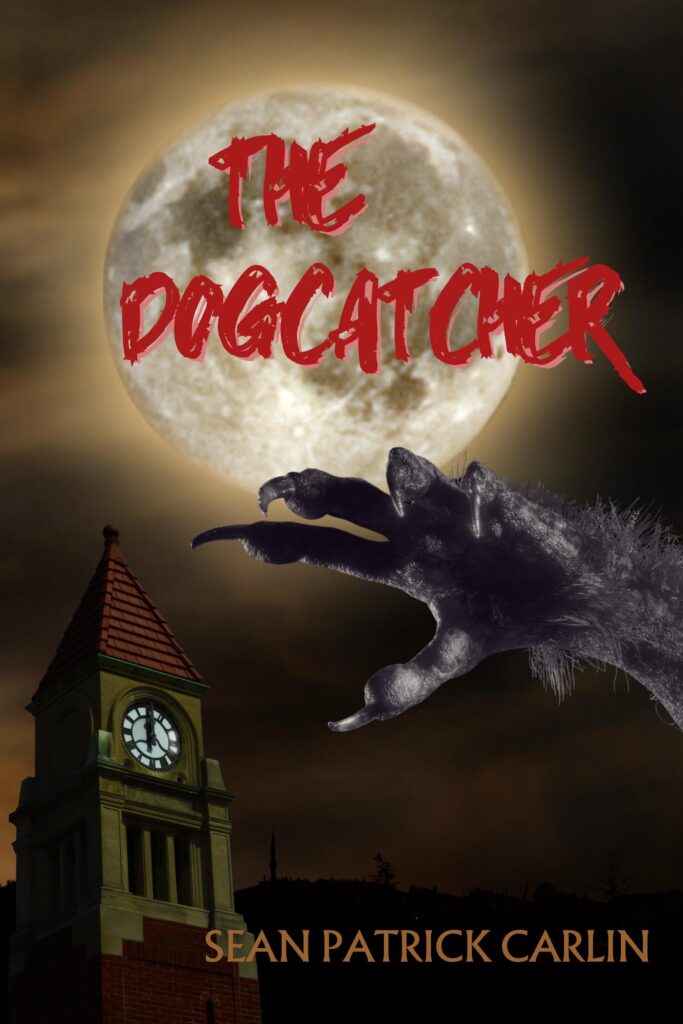
Research suggests there are many therapeutic benefits to consuming horror fiction and cinema, covered in this New York Times article from 2022. And of course, not all horror is meant to terrify. As I’ve noted elsewhere, my debut novel, The Dogcatcher, was written to evoke the spirit of the horror/comedies on which I was raised, including (but in no way limited to) Ghostbusters, The Lost Boys, The Witches of Eastwick, and Tremors. It was meant to be atmospheric fun, in contrast with “sheer terror” stories like The Exorcist, The Texas Chain Saw Massacre, and more recently films like It Follows and X.
Thanks for visiting, Anneli. I hope your summer has thus far been filled with fun days and bountiful creativity!
Congratulations on being part of this event, Sean.
Thanks, Jacqui! While The Dogcatcher isn’t what I’d necessarily identify as “pure ecohorror,” it nonetheless features a lycanthropic villain and a hero whose explicit job is to care for animals, so it definitely touches on our relationship with the natural world. In Chapter 20, the titular protagonist visits the university campus to consult a dusty reference book (the fictional Something Wild) that waxes metaphysical about man’s relationship to nature — because a field trip to the library is an irresistible horror-movie trope I consciously included in the novel — so I was definitely skirting along the edge of ecohorror. But it was more likely my environmentalist credentials — my ecocritical essays and my longstanding association with Climate Reality — that scored me the invitation to speak at the conference. Either way, I was happy to participate.
Thanks for popping by, Jacqui! Hope you’re having a great summer!
Some movies I can think of where cars are evil or used for evil:
The Duel (1971)
Directed by Steven Spielberg
Written by Richard Matheson
Starring Dennis Weaver
The Car (1977)
Directed by Elliot Silverstein
Starring Ronny Cox
Death Proof (2007)
Written and Directed by Quentin Tarantino
Starring Kurt Russell
Indeed, Dell — there was definitely a subgenre of “malevolent-car cinema” in the ’70s, including Duel and The Car, and I’m sure Death Proof is in its way a conscious throwback to those kinds of movies. (Because we’ve already discussed how Tarantino’s entire career is a love letter to the exploitation films of his youth.)
Such cheapie horror thrillers (along with the likes of Killdozer! and The Hearse) were probably, in their own way, responses to the oil shocks of ’73 and ’79 same as dystopian fantasies Death Race 2000 and Mad Max. The trend of evil cars continued into the ’80s, with Christine and Maximum Overdrive (both King adaptations) and The Wraith with Charlie Sheen.
But exploitation flicks like that were mostly outliers; in their studio productions and prestige pictures, late-20th-century Hollywood was staunchly committed to mythologizing the automobile as a symbol of the American spirit. And with the possible exception of Duel, which transcended its made-for-television pedigree, I’m not sure any of those movies are very well-remembered or -regarded. They were B-movie junk then that are mostly forgotten today. No one’s made a truly classy (or classic) malevolent-car thriller — even Tarantino, who considers Death Proof his “worst movie.”
I’d love to see storytellers revive the malevolent-car genre in really creative and topical ways. (Or at very least consciously apply the Harvey-Gillis Test I proposed in “Highway to Hell.”) As I mentioned to Anneli above, filmmaker Ryan Coogler is doing a magnificent job of taking cultural narratives that have traditionally been in support of white male heroic journeys — Rocky, Marvel, From Dusk Till Dawn — and reimagining them to dramatize the Black experience. I’d love to see him tackle Christine vs. the Bronx!
First of all, welcome back. I’m glad to see you’re doing so good. And if you had to stop blogging for a while, a least it’s for a good reason
This is the first time I’ve heard the word “ecohorror”, so I can’t really say what it should be. But I would not describe The Dogcatcher as ecohorror. Even though the monster is animalistic, it is not the result of nature gone amok. The monster was created by magic, science, or some weird unholy combination of the two (we never do find out exactly what)
Although Judeo-Christianity advocates total domination of nature, many (though not all) Neo-Pagan and Eastern teach that we should try to live in balance w/ nature
Nature has always been scary and dangerous, particularly in the days before guns. Look at Little Red Riding Hood for one example (though the major reason for the hatred against wolves was not so much that they would attack people as they would attack livestock). It’s only recently that we have started to realize that we should, as I said, try to live in balance w/ nature
I do enjoy your essay, and I’m glad you’re back
Thanks, Dell! Thank you for coming back! I genuinely love this blog, I love interacting with all my blogosphere friends — I have absolutely missed it — and I have no shortage of topics about which I’m itching to opine, from the Buffy revival (which I called back in March of ’23 while SMG was breathlessly denying it) to the Gen Z stare (I may face-punch the next kid who pulls that charmless shit on me).
The problem, of course, is everything I want to express can’t seem to keep from ballooning into a 5,000-word treatise! I’ve got a double-digit birthday coming up next year, and I have so much fiction I want to produce while there’s still time. So, the blog necessarily had to be placed on semi-moratorium. Since this post was merely a transcript of a Q&A session, it was an easy way to provide (relevant) new content without the time commitment required of a formal essay.
As for ecohorror as a term and/or genre: It’s yet one more malleable label (the kind Oren hates) that is only as helpful as one finds it. I agree: I would not classify The Dogcatcher as ecohorror. (I’m currently reading an ARC of an amazing ecohorror novel, Rebecca Baum’s The Brood.) Ecohorror is one of those “genres,” to the extent that that’s even the right word for it, that sits on a Venn diagram with animal horror (The Birds, King Kong, Arachnophobia, Man’s Best Friend, Anaconda, Monkey Shines, Cocaine Bear) and body horror (The Toxic Avenger, The Fly, Hellraiser, The Substance, Jennifer’s Body, Spring, The Human Centipede).
While The Dogcatcher demonstrates elements of both animal horror (the attack sequences, particularly in the early chapters) and body horror (the lycanthropic transformation in Chapter 27), my creative intention for the project was “supernatural horror/comedy” — basically, an old-school, good-time monster yarn like Ghostbusters and The Lost Boys. So, it was an interesting exercise to discuss ecohorror with my colleagues and debate its parameters as a “genre” and usefulness as a concept.
I certainly think it is a subject that deserves further study and discussion, especially as storytellers figure out how to incorporate the climate crisis into commercial fiction without conflating environmentalism with ecoterrorism, or reinforcing the overpopulation myth, or unhelpfully (and misanthropically) claiming that humanity has wrecked the planet (here’s looking at you, Vera Farmiga and Ernest Cline), when the blame can be placed entirely at the feet of corporate fossil-fuel extractors who knew the consequences of their actions half a century ago, buried the data, and lied to the public. Humanity didn’t wreck the planet; Big Oil did.
Yes, the Judeo-Christian worldview is quite literally patriarchal, asserting the preeminence of Father God (who demands devotion and obedience in return for our dominion over the Earth) over Mother Nature (a provider who encourages our stewardship of the land and animals). These were concepts I touched upon in the citations from the fictional reference book Something Wild in Chapter 20, much of which was drawn from Naomi Klein’s work in This Changes Everything: Capitalism vs. the Climate.
There is a movement underway to adopt a more permacultural approach to agriculture and livestock management, drawn from the preindustrial practices of Indigenous peoples, and I think eventually we will implement those practices at scale, but we’re up against a hostile administration and institutionalized capitalism. Such is why the storytellers will play a crucial role in inspiring the public’s moral imagination… provided we begin challenging our own.
Thanks again for the kind words, Dell. I am back, to the extent I was ever really gone, and I do hope to post a bit more in the second half of 2025, including the third installment of “Under the Influence.” I’m eager to write some short-form nonfiction after having spent all year on long-form fiction, which requires different muscles. Hopefully this autumn…
>short-form nonfiction
For a certain definition of “short”
Indeed, sir! LOL! “Short” is relative here at SPC-HQ!
Very interesting discussion on EcoHorror, Sean. I always gain so much insight from you on films and fiction.
Also appreciated your comment (above) on the need to explore it “as storytellers figure out how to incorporate the climate crisis into commercial fiction without conflating environmentalism with ecoterrorism.”
Sim Kern did an interesting take on that in ‘The Free People’s Village.’
Hi, Dave! Thanks for taking the time to visit, read, and comment.
I’ve never heard of — let alone read — The Free People’s Village, but I’m intrigued by the publisher’s summary. I’ll seek out a copy at the library. Thanks for making everyone here aware of it.
As for my own insights on ecohorror, most of my views are aggregated and/or synthesized from ecocritical blogs like Yale Climate Connections and Ecocinema, Media, and the Environment, as well as the 2023 essay collection Fear and Nature: Ecohorror Studies in the Anthropocene. (Keep this strictly between us, but I’ve mostly just learned to read folks a lot smarter than me!)
As a Climate Reality Leader yourself, you know that Vice President Gore encourages us to challenge our moral imagination — that is, to understand that solving the climate crisis isn’t simply about drawing down carbon emissions (though definitely that), but envisioning a cleaner, fairer, more just world for everyone, and then reifying that world through smart choices.
After Mr. Gore introduced me to that concept — moral imagination — it occurred to me that screenwriters and novelists are incentivized to develop our commercial imaginations, with no consideration (and sometimes active disregard) for our moral imaginations. We don’t put great thought into some of the pernicious cultural assumptions we (unconsciously?) integrate into and promote through our fiction.
Interrogating the moral imagination of the storytellers — myself included — has arguably been the central theme of this blog since 2018, when I posted “Changing the Narrative.” Since then, I’ve conducted critical reappraisals of many stories I admired in my youth, from Mad Max to Rambo, Die Hard to Heat, copaganda to carsploitation, the ’80s warmth of Back to the Future to the ’90s cool of Quentin Tarantino.
My family teases me for how reflexively opposed I am to the endless nostalgic revivals of movies and TV shows from the ’80s and ’90s — it was commented upon as recently as yesterday at a family gathering — but part of the reason for my objection to revisiting old characters and rehashing old concepts is that, in doing so, we reaffirm the often outmoded values embedded in those stories. We’re never going to envision a path forward if all our stories do is encourage us to gaze backwards.
If our storytellers are merely interested in irresponsibly exploiting the climate crisis to put a contemporary spin on the same old stories — and then have the nerve claim to artistic immunity (“It’s just entertainment, folks!”) — then they are not only failing to contribute to a solution but are themselves agents of the problem.
And to be clear: I am not suggesting fiction needs to pass a purity test. Clueless is celebrating its 30th anniversary this month, and I’ve read so many retrospectives on it these past weeks that I thought, “Why don’t I just rewatch it?” And despite how generally good-natured the story and its characters are, plenty of things about it wouldn’t fly today, including Cher self-admonishing for being a “retard” and a lighthearted joke about (trigger warning!) suicide. And yet…
It is a terrific film, full of great humor, genuine emotion, and prosocial values. All movies should age as well as Clueless — and be just as entertaining after 30 years! (It’s also a remarkably nonjudgmental movie, with characters of all different stripes and backgrounds who not only coexist but support one another. Clueless has lessons to teach us still…)
I don’t demand morally immaculate storytelling, only morally imaginative. Clueless is very much the latter if not (by latter-day standards) entirely the former. Fiction shouldn’t be written in accordance with a list of quote-unquote “woke” commandments, merely with all the moral imagination the storyteller can muster. Only then will we start getting cli-fi and ecohorror about the climate crisis that meets this unprecedented moment.
“I think nature is trying to warn us that capitalism is killing us!”
Yup. Sounds about right, Sean.
This was an interesting Q&A. I appreciated your comments about the sheer magnitude of the challenge, the perfect storm of threats we’ve induced, the time it would take to reverse them, and how it’s all a bigger job than one white guy can handle. How do you write a book or make a film about that???!!!
It was great to see this post pop up. I hope you’re doing well. 😀
Hi, Diana! So lovely to hear from you! As I said to dellstories above, I have genuinely missed blogging and interacting with all my WordPress friends these past months. I simply found myself with more obligations than time — and necessarily had to scale back on not only my own blogging but my participation in the wider blogosphere. I don’t think I’m the only one. Our old friend Erik at The Best Advice So Far… has been pretty dormant lately. I think it’s even fair to say your own blogging output has somewhat slowed over the past year? You certainly post more regularly than I do, but we all seem to be making time for other interests and/or commitments. Not a criticism; merely an observation.
That said, all is well be me — thank you so kindly for asking. My family is healthy and my days are productive. I have been producing volumes of new fiction. Turns out, that’s easier to do when I’m not publishing monthly dissertations on pop-culture esoterica. Who knew!
To address your comment: Authors of ecofiction (in all genres) seem to stumble into the same old traps/tropes — conflating environmentalism with ecoterrorism; misanthropically (and erroneously) imputing our ecological woes to humanity instead of the extractive industries directly (and largely solely) culpable for them; offering either magical or conventional solutions to those problems because the storytellers don’t exercise the moral imagination to envision a better world and suggest a prescriptive path to arriving there. Mostly, we just get a lot of unimaginative or (worse) irresponsible stories that present the consequences of ecological degradation as humanity’s “just desserts” (like that immoral piece of shit Ready Player Two), or problems best left to demigods (Spider-Man: Far from Home) and solitary heroes (Mad Max: Fury Road).
This Medium article from 2021 — “Introducing the Climate Test: What Makes an Effective Climate Story?” — offers a practical method for storytellers to scrutinize their own treatments of environmental themes in their fiction. In short, the criteria are:
1. The story acknowledges that the Earth’s climate is changing…
2. Due to human business-as-usual which, if willingly left unchecked, is portrayed as a negative character trait…
3. And at least one character does something at least once to help solve the problem.
The piece itself puts a number of popular ecocinematic specimens to the test, including Snowpiercer, Mad Max: Fury Road, Kingsman: The Secret Service, Aquaman, Fast & Furious Presents: Hobbs & Shaw, Interstellar, Venom, Mother!, and The Day After Tomorrow. It’s worth reading for those interested in further exploration of this topic. I may very well revisit this subject in a future post…
Thanks so much for visiting, Diana. I hope to be a bit more active here during the second half of ’25, but I can’t offer any assurances on that. The only thing I can say for certain is that this blog remains operational (I will continue to post for years to come, if somewhat more infrequently than during the first decade of its existence), and lack of recent activity here should not be construed as a sign that I have retreated from this space or from writing in general. Quite the contrary! I’m just having too much fun at present writing long-form fiction. But as those projects get nearer to publication, you can be sure I will share anecdotes of their creative development right here. I have a lot of fun stuff in the pipeline…
Enjoy the latter half of summer, Diana. I hope you’re doing well, too…
SPC
Always happy to find new posts from you, Sean! As always, you offer deep insight and a big-picture analysis that I find refreshing and am truly grateful for. The critical issues that we are facing as a global population cannot be solved by retreading old mindsets or clinging to tradition. Your ability to widen the lens is so very important! As to the central topic of Ecohorror – and BTW, great interview!! – I am among those who have never liked the horror genre. But I did jump at the chance to read your novel “The Dogcatcher” because, well, because you wrote it. And I heartily agree with your description of your story. “The Dogcatcher, was written to evoke the spirit of the horror/comedies on which I was raised, including (but in no way limited to) Ghostbusters, The Lost Boys, The Witches of Eastwick, and Tremors. It was meant to be atmospheric fun, in contrast with “sheer terror” stories like The Exorcist, The Texas Chain Saw Massacre, and more recently films like It Follows and X. ” My objection to most (certainly not all) works labeled horror is that the framework is only there as an excuse for the violent, scary parts. In your work the scary stuff does not take the focus away from the characters I grew to like or their journey through the world you have created for them. Well done, my friend!
Hi, Tara! Thank you for reading this post and leaving such a thoughtful comment!
To your first point — about how we’re never going to find our way out of the twin crises of climate change and biodiversity loss by clinging to old traditions and outmoded mindsets — that is exactly what Vice President Gore means when he encourages us to challenge our moral imagination. Here in New York City, we’ve got a Democratic candidate for mayor, Zohran Mamdani, who is a card-carrying democratic socialist. (As am I, by the way.) And since Mamdani won the nomination last spring, no one in the Democratic establishment here in New York has endorsed him, my Baby Boomer neighbors can’t believe their Millennial scions were so stupid to fall for “the left-wing Trump” instead of supporting Cuomo(!), and I have read no shortage of op-eds about how Mamdani is a gift to the Republicans because now they can point to New York and doom-scream “Socialism!” (As if they didn’t accuse Obama and Biden and Harris of that. They would have said it no matter who had the “D” next to their name on the ballot; better to have a candidate who doesn’t run from the label, says I.)
For me — and I won’t turn this into a mini-essay in support of Mamdani, but the point is relevant to this post’s closing statement — what his candidacy represents is a hard break from the neoliberal status quo that has kept the poor impoverished, enriched the rich, and made the greatest city in the world (and the country at large) completely inhospitable for its working-class denizens, in stark contrast from how it was when I grew up here. Yes, Mamdani has a lot of lofty ambitions that he may or may not be able to realize — we’ll see how nimble a politician he proves to be once in power — but at least he’s offering a different approach.
If nothing else, he’s saying aloud what the Democratic establishment has steadfastly refused to concede: The system ain’t working for anyone but the billionaires. This is a man with moral imagination. Here’s hoping he lives up to his aspirations. (If he does, it could be a model for blue-city mayors everywhere…)
Thank you for the kind words about The Dogcatcher. While I certainly enjoy a good “sheer terror” horror story every so often — it can be fun to have the pants scared off you! — those aren’t really the stories I’m interested in writing. There are plenty of other authors doing that much better than I ever could; I met a great number of them at StokerCon, and they’re wonderful, creative people.
Like you, I struggle with violence in cinema — the fine line between artistic and exploitative. When it comes to violence, I tend to think even the most well-intentioned storytellers are misinterpreted. I mean, did anyone really walk away from Texas Chainsaw thinking, “God damn, what a searing indictment of neoliberalism”? Or did they just hope not to have nightmares about a chainsaw-wielding cannibal for the rest of their lives?
The ambiguity of violence in cinema is something I explored in my review of Heat 2 — that “to show something is to ennoble it,” as Truffaut so astutely observed. To that point: Just last month, in the comments section of “Under the Influence, Part 1,” there was a discussion about the way The White Lotus has become a garish celebration of the social privilege it proclaims to lampoon. It is, in fact, aspirational, not satirical.
I’m not saying we shouldn’t have a diverse array of stories, or that stories should be required to pass a purity test, but I think it would behoove the storytellers to perhaps give greater thought to their subjects before readily exploiting them (like environmentalism), and to accept that any subtextual social messaging (particularly of the subversive or satirical variety) is probably going to sail straight over the heads of 95% of the audience. Archie Bunker and Tony Soprano and Walter White are revered, not reviled. In a media landscape of ubiquitous ironic detachment, irony is the norm, not the subversion; it has, as such, lost any teeth it may have once had. It’s time to give ironic storytelling a rest and aspire to a mode of narrativity that embraces sincerity and forthrightness.
And that doesn’t mean fiction should shy away from dark themes, but there’s been a nihilistic streak in our pop culture (that has absolutely bled into our politics) that’s overdue for a moratorium. We need the storytellers to aspire to greater moral imagination. And I believe exercising greater moral imagination will inspire greater creative imagination. A number of people in the audience of that panel came up to me afterward and told me they can’t believe no one’s written Christine vs. the Bronx. There’s a wellspring of untold stories out there if only we were willing to set old narratives aside (like this and this, for starters) in favor of stories relevant to our historically unprecedented era. I can’t wait to read them… and I can’t wait to write some!
Thanks for visiting, Tara! Wishing you a bountiful and beautiful autumn…
Sean