In this, my very first post, I suggest a curriculum, compiled and customized from several different proven storytelling programs, that will teach any aspiring writer the fundamentals of narrativity: structure, genre, and characterization.
Welcome to the blog!
Though I hold bachelor’s degrees in both film and English, most of what I learned about screenwriting—and fiction writing in general—came in the form of a decade-long “crash course” at the School of Hard Knocks (admission is easy; tuition’s a killer). Reading and writing screenplays was the first critical step—I consciously studied formatting and unconsciously absorbed form—but gazing at a painting no more demystifies the esoteric art of illustration than listening repeatedly to a song uncloaks the “magic” of musical composition. Command of craft in any art form, writing included, demands discipline—the skilled use of tools that can be summoned at will—and for that, I turned to the many, many screenwriting how-to books that seem to have flooded the marketplace since the Nineties.
But, why spend time reading about writing when the best way to improve is “practice, practice, practice,” right? After all, many folks—including, in no small numbers, pro screenwriters—have dismissed the merits of so-called “screenwriting bibles” and “gurus,” and, indeed, few of them bring any new insights to the conversation. But, the practice of deconstructing the principles of literature and drama goes at least as far back as 335 BCE with Poetics—a respected and lasting treatise on literary theory by any metric—and, as Aristotle seems to have suspected, the meticulous study of narrative patterns and mythic archetypes offers a foundation for the codification of techniques—the building blocks of craft.
Campbell and Vogler: Mapping the Hero’s Journey
With screenwriting manuals their own cottage industry at this point, who pioneered the modern trend of comparative analysis? Mythologist Joseph Campbell identified the fundamental narrative patterns of what he dubbed the “monomyth”—the “Hero’s Journey” stages evident in narrative traditions that span thousands of years and cultures—in his 1949 work The Hero with a Thousand Faces, a tome that achieved particular relevance in contemporary Hollywood when George Lucas cited its influence in the structure of his Star Wars saga.
In the 1990s, a development executive by the name of Christopher Vogler would devote a book of his own to illustrate how Campbell’s schema was reflected in Hollywood movies across every genre—and could be consciously applied to the development of screenplays—in The Writer’s Journey: Mythic Structure for Writers.
By delineating character archetypes and demonstrating the stages of the Hero’s Journey as they appear in contemporary movies as diverse as Titanic, The Lion King, Pulp Fiction, and Star Wars, Vogler illustrated that the underlying mythic patterns present in Homer and the Holy Bible were sufficiently durable to have survived into the complex world of the twentieth century, and sufficiently resonant to continue to serve as the structural foundation for the era’s predominant form of entertainment: cinematic storytelling.

Critics of the Campbell/Vogler paradigm—as well as shortsighted creative execs who mistakenly assume upon reading it that they’ve stumbled upon the “magic formula” for blockbuster storytelling—have misinterpreted the Hero’s Journey model as a cookie-cutter template for the commercialized mass-production of an ostensibly creative product.
Here’s why that doesn’t wash: The doctrines presented in Campbell and Vogler’s works are more of a theoretical exercise than a set of practical tools; they are thought-provoking principles but not readily applicable methodologies. It would behoove any writer to be familiar with the monomyth, with the implicit acknowledgment that every story is different and demands a customized approach, same as a physician is required to have a grasp of gross anatomy, even as he recognizes each patient is different and will require personalized treatment.
What makes most of the screenwriting manuals published since the popularization of the Hero’s Journey so redundant and useless is that all they have to offer is regurgitated (and often renamed) theory; they fail to take the next step forward and forge specific, practical tools out of anecdotal doctrine. Two screenwriters, however, independently rose to the challenge…
Snyder: Genres Declassified—and Classified Anew
In 2005, produced screenwriter Blake Snyder made the Hero’s Journey model yet more accessible in his unpretentious, reader-friendly manual Save the Cat! The Last Book on Screenwriting You’ll Ever Need: Portentous, academic terms from the Vogler paradigm like “Crossing the First Threshold,” “Test, Allies, Enemies,” and “Approach to the Inmost Cave” were rechristened as “Break into Two,” “Fun and Games,” and “Midpoint,” respectively, and organized in the form of a “beat sheet”—a handy, easy-to-use tool for laying down the macrostructural bones of a story. Though the names of the stages—or “beats,” in screenwriting parlance—somewhat differ from Campbell to Vogler to Snyder, their underlying narrative function remains very much the same across all models. The difference with Save the Cat! is subtle but crucial: Snyder’s approach reifies concept into appliance.
His revamping of the “beat sheet” aside, Snyder’s chief innovation—and his most valuable contribution to the screenwriter’s toolbox—was the classification of ten distinct story “genres,” each with its own set of long-established conventions and narrative requirements: Monster in the House; Golden Fleece; Out of the Bottle; Dude with a Problem; Rites of Passage; Buddy Love; Whydunit; Fool Triumphant; Institutionalized; Superhero. (It is a testament to Snyder’s plainspoken approach that you can begin to imagine the particular precepts of each of those categories merely from their names alone.)
In conference rooms and coffee shops throughout Hollywood, an inordinate amount of development time is spent comparing your movie with what’s come before: “It’s like The Hangover meets Transformers!” Creatively stifling though that can sometimes seem, there’s nothing inherently wrong with the practice—drawing from precedent can be extremely helpful and a tremendous source of confidence as you develop your premise—but one must take cues from the proper cinematic antecedents: If you are writing a Golden Fleece, for instance, you don’t want to look to Die Hard (a Dude with a Problem) as an exemplar—you’d be better off analyzing Indiana Jones. The ten different story types each have markedly different requirements—and correspondingly different audience expectations—and a writer needs to know with certainty upon which a given premise is expected to deliver, which is where Snyder’s cogent categories prove an indispensable tool.
Recently, I developed a Monster in the House screenplay whereby I would field all sorts of well-meaning notes from creative execs to “make it like Armageddon” or “make it like District 9,” to which I would politely and confidently respond, “Those examples don’t really apply; you are comparing apples with oranges since this is a Monster in the House, and those are Dudes with a Problem.” Save the Cat! offers tools that, if nothing else, help one weed out misguided advice and make an intelligent case against it; for the genre categories alone, it should be required reading for all screenwriters, producers, directors, and development executives.
(Though, as I indicated about The Writer’s Journey above, many of the latter have perused the book without ever ruminating on it, digesting it, or putting it into practice, and subsequently felt empowered to speak with full authority on matters of storytelling, were it only that easy; I believe that this unfortunate usage—the misapplication of storytelling tools—has spurred the backlash against “how-to” methodologies in the professional screenwriting community. Storytelling is an acquired skill set that requires years to master, like the practices of law and medicine, and getting comfortable with the tools of the trade is part of that perennial apprenticeship; I recommend spending time “trying them out” via the deconstruction of several dozen of your favorite films before applying them to your own writing.)
In the months ahead, I will relay experiences from my own upcoming projects in which I used Snyder’s tools to eschew “artistic intuition”—I’m certain I don’t have a drop—in favor of taking a methodical approach to developing a premise into a fully realized story that takes best advantage of the time-honored conventions of its particular genre.
Freeman: The Secrets of Characterization
So, Snyder has structure and genre conventions covered, but what about character? So far as I know, only one scholar has effectively decoded the techniques of characterization: how a character is imbued with a unique voice and worldview that makes him different from the trillions of fictional creations that preceded him; how empathy is evoked for said character by the artful deployment of advanced writing methods that function outside the cognizance of the audience; how the plot pushes him through his transformational arc to create an emotionally fulfilling storytelling experience.
In his brilliant Beyond Structure workshop, screenwriter David Freeman teaches that fictional characters are composed of a handful of distinct, consistent, and identifiable facets that govern their actions, reactions, decisions, and dialogue—and, like Snyder did for structure with his elegant “beat sheet,” Freeman offers a simple-yet-revolutionary tool to “map” your characters before you start writing them (which I won’t discuss in detail out of respect for his intellectual property).
Conversely, utilizing Freeman’s unique methods, any preexisting character can be deconstructed in order to understand, at a glance, what makes him tick (no lengthy biographies augmented with copious and unnecessary details required). This powerful tool is of particular interest to me, and I will be relying upon it in blog posts to come to reverse-engineer some truly memorable characters from film, television, literature, and even pop music! I’ll identify the deliberate method at work behind what often seems like nothing more than arbitrary personality choices on the part of the writer, and I invite you to challenge me to deconstruct any character—contemporary or classic, hero or villain, cinematic or literary—and we can marvel together at the artful use of technique employed in the creation of each. (Tell me some of your favorites in the Comments below.)
A Celebration of Craft
So, what would I recommend to aspiring fiction writers? The School of Hard Knocks offers an infinitely broad curriculum—take the word of an alumnus—but there’s no need to be enrolled interminably: Study Campbell/Vogler for mythic structure, Snyder for genre, Freeman for characters (among the many other virtues of his workshop, which is, at present, the only venue to learn them—his teachings aren’t available in a published format). Even intermediate and advanced writers would do themselves a favor by exercising a refresher in the theories and methods of these visionary instructors.
“Intuition” is for those without the courage to master craft; a tool isn’t a good or bad thing per se—it’s all about the skill of the artist who wields it. We’re all inspired by great works of art, but I think you’ll find that the instructive and often illuminating study of craft can be its own fulfilling reward, too. I’m glad you’ve joined me for the celebration.
Editor’s note (September 19, 2024): In the decade since this inaugural post, the blog evolved from what I initially envisioned as a forum on storytelling craft to a wider discourse on the ways in which narrativity gives shape and meaning to our lives for better and for worse, how pop culture has been corporately calibrated over the past quarter century to keep audiences in a state of “commercial adolescence,” and how it can be reclaimed as a powerful force for positive sociocultural and -political change by storytellers who aspire to moral creativity.
For those seeking a summary overview of the blog’s content—a contextualized recap of its creative evolution over its first eight years—I refer you to “A History of the Blog (So Far)—and a Programming Update” (September 26, 2022). Additionally, I’ve curated links to my highest-value posts on the Start Here page.
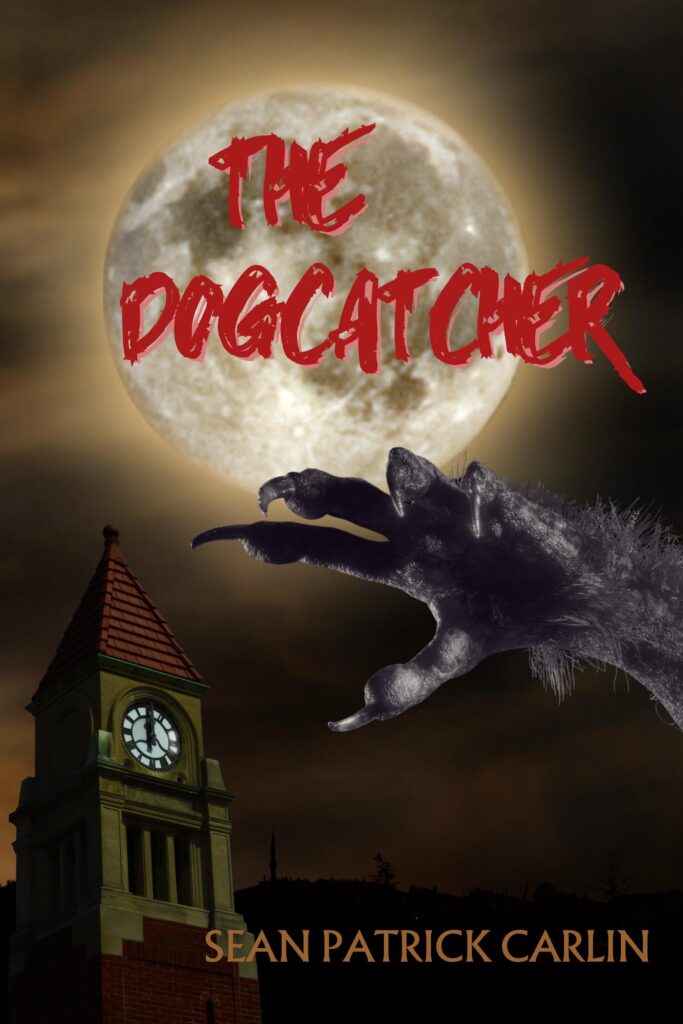
I detail the development process of my debut novel, The Dogcatcher, in “The Dogcatcher Unleashed” (September 20, 2023). The novel itself is available via Amazon from DarkWinter Press.
This post discusses the difference between rules and guidelines
https://theweeklyemail.storyandplot.com/the-why-behind-the-rule-is-what-matters/
I don’t believe it! My very first post finally got a comment!
Earlier this year, as it happens, I reviewed this post and thought it could do with a fresh coat of paint, given everything I’ve learned over the past decade of blogging. This past April, I wrote a good chunk of a “reboot” post titled “The Case for Craft Redux: On the Principles of Storytelling — and Why They’re Worth Studying,” but quickly found myself in the weeds once again, drawing time and attention away from my fiction, so I tabled it. I may yet get back to it…
Part of the impetus for refreshing this old piece came from an essay Mythcreants published in March called “The Problem with Following Popular Story ‘Structures.'” Oren’s become so reflexively dismissive of screenwriting advice that at this point he’s no longer even engaging in good-faith analysis of it, if he ever was. Case in point:
Putting aside for the moment that a wizard detective tracking down a particular poltergeistic nemesis sounds less like MITH than it does “Fantasy Whydunit” (in the vein of Ghost, The Sixth Sense, and Who Framed Roger Rabbit) or “Fantasy Superhero” (à la Brazil, Eragon, and Harry Potter), Snyder never issued narrative requirements, merely identified genre conventions. How a given artist observes or subverts those tropes is up to him.
Oh, Jesus. The only one saying “you can’t do that” is Oren — not Vogler, and not Snyder, which Oren would know if he’d bothered to read either of them with a half-open mind. Star Wars is one of the most conventionally structured Hero’s Journeys in all of contemporary pop culture (Lucas consciously emulated Campbell when he wrote it), and wouldn’t you know it starts with… a space battle! The “Ordinary World” in that movie is the dull terrestrial life of a farmhand to which the hero, Luke Skywalker, is consigned until the inciting incident — another concept they find dubious (though at least Chris’ essays are more circumspect and prescriptive than Oren’s, and mercifully devoid of snide “humor”) — upends the status quo and sends Luke on his Golden Fleece quest to aid the Galactic Rebellion.
It’s easy to write snarky dismissals like those above when one insists on treating every piece of advice on craft as an inviolable “rule” to be interpreted absolutely literally. See? Told ya! All capital-b Bullshit! Oren rails against how-to programs that promise an easy-bake formula — and, sure, not all of them have been developed with the same insight and cogency as Vogler, Snyder, and Freeman’s — but what kind of codified system does he have to offer?
What Oren ought to be advising his readers and clients is that they understand and articulate their creative intent for their project, à la the Tom Vaughan piece you linked to, Dell, then suggest tools (not “rules”) to help reify their vision. He should be explaining that not every tool is right for every job, but that the tools are nonetheless available to facilitate creative expression. Use them if they’re helpful; disregard them if they’re not. (Many legendary musicians — Jimi Hendrix, Danny Elfman, Jimmy Page, Irving Berlin — never learned to read sheet music.) But any tool used should be in service of a clear artistic vision — what Vaughan calls “the why behind the rule.”
Like we studied in “There He Was… and in He Walked,” Robert Rodriguez decided against using the Hero’s Journey to structure Desperado; it wasn’t going to help him tell the story he wanted to tell. I would argue that was for both the better (the movie’s got a thrilling kinetic energy and singular point of view all its own) and the worse (thank God the direction was so surehanded and the cast so charismatic, because the script itself is merely a series of gunfights without much of a logical narrative foundation to support the action), but there’s no arguing that Rodriguez did it his way. He didn’t dismiss screenwriting principles as bullshit; he simply decided he wouldn’t consciously apply them to his script because he didn’t want to write an action movie that looked/felt like every other.
And for better and worse, he didn’t. Yes, Desperado has its shortcomings, as I pointed out. But it’s also one of the few pure-adrenaline films from that era that doesn’t feel, stylistically, like a mid-’90s action movie in the vein of Michael Bay or John Woo or Steven Seagal or Jan de Bont. It’s slick without being glossy, you know? Many ’90s thrillers, like Bad Boys and Broken Arrow and Executive Decision and Speed, are dated, whereas Desperado still feels kinda fresh and timeless — it still feels cool — even on the eve of its 30th anniversary next month!
I think Vaughan’s Clueless analogy is apt: You study the rules of the road, consciously applying them whenever you practice driving (adjusting your rearview, depressing the brake, keying the ignition), until over time the “procedurals” become second nature — they’ve become intuitive — and at that point you just trust your instinct whenever you get behind the wheel. If a dogmatic devotion to “‘rules’ is essentially allowing yourself to be intimidated” — and I agree with Vaughan that it is — then a blanket repudiation of them is no less indicative of the same insecurity by way of intimidation. I hear Oren call bullshit quite a bit on what he labels “pseudo-structures,” but has he ever propounded a systematized methodology for telling stories? What’s “the Mythcreants Way” of practicing craft, exactly?
I second everything Vaughan says, from his advice on directing from the page to the use of CUT TO: to citing specific song cues. When you’re writing from a place of confidence in yourself, your skills, and your concept, you don’t sit in front of the keyboard fretting about what you can and can’t do — what it says in some book or on some website. Such is why creativity is so addictive: because it’s freedom from rules, regulations, prohibitions, and formalities. But freedom isn’t chaos; those seeking it must have respect for structure and a commitment to discipline.
I don’t know, Dell — perhaps the reason I never finished “The Case for Craft Redux” is because I’ve had a crisis of faith about how to both study and teach craft. I don’t really know what to tell aspiring writers. All I know is what worked for me — and what still works for me. I would just encourage writers to build their confidence by developing their skill set, you know?
To that end: Be curious! Cultivate a wide array of influences, familiarize yourself with the fundamentals of narrativity (via Campbell, Vogler, Snyder, whoever), and experiment with different storytelling tools and different story ideas until you find a mode of creativity that gets the job done. Skill begets confidence; confidence begets voice; voice begets “original” fiction — or, at the very least, fiction worth the time and effort it takes to produce it. Focus on that — and shut out, as Oren advises, all the noisiest authorities who insist their product is the truth, the whole truth, and nothing but the truth. On that point, I definitely think he’s onto something…
I like Mythcreants. I’ve even written a few posts for them. But I do have to agree that they (Oren in particular) seem dogmatic in their dismissal of story structure
Yes, they have a lot of good advice. But you have to decide for yourself what advice is right for you and what is not. Ironically, a point that they themselves have made
I comment there frequently, but I haven’t argued in defense of Blake, et. al., because your defense is far more eloquent than mine would be
I’m glad to see your reply. Too many of my internet friends have simply disappeared over the years. I’m glad to see you’re still alive and kicking
I attribute my own appreciation for structure — for purposeful narrative design — to my screenwriting background. A pro screenwriter is trained to understand he is a collaborator, and in many instances, for better or worse, not much more than a “pair of hands” hired to create a blueprint that satisfies the (often irreconcilable) demands of a director, a producer, the studio writing the checks, and in some cases even an actor with creative clout attached to the project.
When you go into a pitch meeting, you have to be able to convey your premise in a logline — the concept, conflict, irony, and commercial hook in one to two sentences tops. The Dogcatcher is a horror/comedy about a municipal animal-control officer whose Upstate New York community is being terrorized by a werewolf. That single sentence gives a publisher or producer everything they need to know if this project is right for them.
Projects are sold off their loglines, not their scripts. The scripts will be rewritten many times, often by many different scribes, but the logline is the conceptual lodestar of a given project. I’ve known many writers — particularly young novelists — who insist their story can’t be adequately summarized in a logline, but “when you read the script, you’ll see why the story’s so special.” Nope. Doesn’t work like that. If you can’t hook me with a logline, it’s exceedingly unlikely the manuscript or screenplay will win me over.
So, once you’ve sold a prodco or studio on the logline, you give them the macrostructural overview of the plot by way of a beat sheet, which — sorry, Oren — is more often than not going to adhere to the generalized monomythic patterns identified by Campbell, Vogler, Snyder, et al. Coffee tables and cars and houses take many different shapes and forms, but the fundamental structures of each are the same: a table has four legs; an automobile has four wheels; a house has four walls. (Yes, there are exceptions, but those are deliberate experimental variations on established archetypes.)
Your beat sheet’s done? Great! Now you fill out the plot — the forty-or-so sequences of the story — on a corkboard. And once you’ve got everyone’s buy-in on the board, you go off for twelve weeks to write the first draft of the script. This way, there are no surprises: The producers know exactly what they’re getting, and the screenwriter knows exactly what he’s been hired to deliver. That’s to everyone’s benefit.
Given all the “chefs in the kitchen” on a Hollywood production, and the fact that filmmaking is a subjective art form, an industry-standard “shared language” was needed. That’s what Syd Field provided, what Chris Vogler refined, what Blake Snyder augmented. And while there are absolutely managers and creative execs in Hollywood that treat those programs as one-size-fits-all formulas — I’ve worked with my share of them — the problem is the misapplication of the tools, not the tools themselves. A straight razor is a neutral implement; what matters is whether it’s in the hands of a master barber… or a desperate mugger. (I say that as someone who’s been on the other end of a straight razor in both aforementioned scenarios.)
The skills I learned as a screenwriter — particularly (though not exclusively) structuring and writing actable dialogue — have served me faithfully as a novelist, a mode of creativity that offers far more artistic autonomy. I recently finished writing back-to-back 65,000-word manuscripts and never once found myself “winging it.” (The scene-summary corkboard is never treated as a bible, I should note, merely a road map.)
While The Dogcatcher is a conventionally structured three-act story — a holdover project from my days as a screenwriter — I’ve moved away from plot-driven stories like that with my most recent three manuscripts in favor of plot-lite character studies. And you know what? In doing so, the tools of Save the Cat! have only become more important!
Because even character-driven narratives are obliged to observe the story conventions identified by Joseph Campbell and his successors. So, in that sense, it becomes even more critical to articulate (if only to oneself) the Catalyst, the Midpoint, the All Is Lost, etc. That’s easier to do when the “heroic journey” is external, as in the case of Back to the Future and Indiana Jones and the Last Crusade, but appreciably more challenging when the arc is mostly internal, as with State of Grace and Scent of a Woman.
Those are the types of stories I’m interested in telling these days, and I suspect I am better prepared to tell them because I spent so many years studying conventional narrativity(*) and aspiring to write very commercial, plot-driven screenplays. I think if I’d gone straight to writing novels, I wouldn’t have the juggling skills required to meet all the demands required by good fiction. (Hence the reason publishing has in recent years adopted so many of the tools and so much of the jargon of Hollywood — because there are more advantages to a “shared language” than there are limitations from it.)
(*) I studied the techniques of screenwriting and practiced them for years under the tutelage of a former staff writer on Buffy the Vampire Slayer, who himself had been trained by David Freeman. I so wish David still offered his weekend-long workshop. That guy developed a storytelling toolbox that goes far beyond Vogler and Snyder — hence the reason it’s called Beyond Structure — that covers how to integrate character arcs, how to write character-specific dialogue, how to create artful moments of empathy. It should be required curricula for all writers.
Look, I’m not going to sit here and tell you The Dogcatcher is a sublime work of literature — perhaps it’s my Desperado in that it is idiosyncratic if imperfect? — but I do think it demonstrates I have the skills to handle plotting, characterization, dialogue, theme, and emotional arcs in more or less the proper proportions. And I think that will be even more evident in my forthcoming fiction, which I would argue is a level up from The Dogcatcher; I’m getting better the more I do this.
As for my online presence: I ain’t goin’ nowhere! I have no plans to sunset this blog. In point of fact, I have so much to say about so many things(*), but as I’ve explained elsewhere, this blog came to consume too much of my bandwidth. It was quite apparent to me when the time came to stop writing about storytelling and start telling stories. To that end, I’ve got some fiction I am very, very excited about, including a collection of novellas I am currently shopping and a full-length novel I’m halfway through drafting.
(*) A subject I would love to tackle right now is the Buffy revival — specifically, the fact that fans are unanimously celebrating the upcoming Hulu series for ditching Whedon in favor of all-female showrunners, this despite decades of shitting on the female-directed movie because it deviated from Whedon’s “vision.” They can all fuck right off. Middle-aged Millennials are saying whatever they have to in order to justify their continued devotion to a character created for the 12-year-old girls of the 1990s. It’s just as sad as what Xers did to Star Wars.
And I feel so bad for that poor 15-year-old actress cast as SMG’s protégée. Man, she thinks she hit the show-business jackpot… but just wait till the “fandom” turns on her. And it will. Buffy is ground zero for contemporary nerd culture, and the weight of the Millennials’ entire childhood will be balanced on this kid’s shoulders, same as Jake Lloyd carried for Gen X. Ask him how that turned out. She’s fucked.
But I can assure you that so many of the ideas and philosophies I’ve workshopped here over the past decade have definitely shaped the creative approach I take to my fiction, and I plan to keep adding to this ongoing project for many years to come. I’ll be posting a piece next week titled “Eco-Horror: Is Nature Trying to Kill Us?” And before the year is out, my hope is to publish “Under the Influence, Part 3: The Top Five Formative Cinematic Muses from My ’90s Adolescence.”
Other than this blog, I’m active on Goodreads — but that’s about it. I’m not on Facebook, Instagram, or TikTok. Upon quitting Twitter, I joined Bluesky, but barely ever bother to post anything there; I lost whatever meager appetite for social media I once may’ve had. I’m planning on posting an “author’s commentary” on The Dogcatcher using the Kindle Notes & Highlights (KNH) feature; hopefully that’s yet another project I’ll get to by the autumn…
Thanks for popping by, Dell, and for giving me an excuse to opine here on the blog without actually writing a new essay! Hope your summer has thus far been full of fun and creativity. Looking forward to chatting again later this week…
SPC
Funny thing, and I say this as a fan of Mythcreants:
Their ANTS (Attachment, Novelty, Tension, Satisfaction), which I do find very useful, is as much of a formulaic structure as anything by Campbell, Snyder, Vogler, or Freeman
Exactly! Everybody’s got their own little terms, mnemonics, initialisms, and acronyms to help codify their particular processes. Campbell’s got phrases like “The Belly of the Whale” and “The Road of Trials.” Vogler’s got “Meeting with the Mentor” and “Approach to the Inmost Cave.” McKee has the “Negation of the Negation.” Snyder’s got “Double Mumbo Jumbo.” Freeman’s got things like “FLBWs” and “Q&Es.” Scriptshadow has “GSU.” They’re all just different ways of labeling the same story mechanics.
The “A” in ANTS is what Freeman would call “Empathy Techniques.” The “N” is essentially what Snyder identifies as the “Promise of the Premise.” The “T” is what Carson calls goals/stakes/urgency. The “S” is catharsis, as examined by Christopher Vogler (among many others). Such is why Oren’s reflexive dismissal of “pseudo-structures” is so shortsighted: Basically everyone from Aristotle to Mythcreants agree on the foundational principles of narrativity; it’s only the labels and perhaps some of the finer points that differ.
No, not every storytelling program is equal — Jessica Brody’s Save the Cat! Writes a Novel is a waste of money, for reasons that have everything to do with Brody and nothing to do with STC! itself — but if you’ve studied this stuff closely enough, you realize that narratologists throughout the millennia keep making the same observations and drawing the same fundamental conclusions about the art and craft of storytelling. Such is why one doesn’t need to study every program, merely a curated syllabus of the most helpful, most insightful ones. Personally, I think STC! belongs in that canon (though only the three books written by Blake Snyder).
I will say, as far as ANTS is concerned, David Freeman’s methodology offers theory-free, no-bullshit, ready-to-use tools to accomplish all of those things: attachment, novelty, tension, and satisfaction. It is, by a country mile, the best creative workshop I’ve ever taken — worth more than my four-year bachelor’s degree in English composition! I took Beyond Structure twice, in fact — in 2005 and 2011. And in 2008, I attended Dave’s advanced course — what he called Beyond Structure, Part 2.
Unfortunately, his website has been “upgrading” for several years now. I hope Dave at least has plans to compile his teachings in a book someday, because no one — and I mean no one — decoded the mystical art of storytelling as comprehensively as he has. Many readers of this blog who took Beyond Structure have reached out to me by e-mail over the years to discuss the course and pick my brain with follow-up questions about one tool/technique or another. I wish I could discuss that stuff here in greater detail, but it’s all proprietary.
Regardless, the fundamentals of narrativity are more important to learn than ever. We were already in a postnarrative world when Rushkoff wrote Present Shock in 2013, and that shift has only accelerated exponentially in the past decade. The two-hour feature film will be completely defunct within the next handful of years; kids today don’t have the patience to sit through movies any more than they do to read a novel. Their brains don’t process stories in that outdated mode.
Meanwhile, television has completely given up on telling disciplined stories in favor of open-ended “storyless” serials. And even that medium is contracting at an alarming rate, with nearly half the writers staffed on shows as recently as 2023 now out of work. That’s not a trend that will be reversing, alas. Long-form fiction — be it movies, novels, and even episodic TV — is losing its cultural purchase in favor of short-form content on social-media platforms.
Critics like Oren worry that instructionals such as Save the Cat! are eroding the art of storytelling. I might argue they’re probably the only things keeping traditional storytelling on life support, however futilely. Before long — and sooner than you think — The Hero with a Thousand Faces and The Writer’s Journey and Save the Cat! will shift from how-to manuals to history books, relics of a pre-digital, more unified media landscape.
Your insights on writing craft are both inspiring and practical — I love how you make the case for craft with clarity and passion. Thanks for sparking deeper thought about intentional writing!
Thank you, Matt — for reading the piece and taking the time to leave a comment.
This was my very first post, published over a decade ago. Over time, the blog evolved into something much more personal than a scholarly forum for studying storytelling craft, but I nonetheless published subsequent posts on the subject you might find worthwhile; you can find links to those essays curated on my Start Here page under the subheading Narrative Craft.
I wish you the best of creativity and productivity in the New Year!